
Os 2 principais princípios em Design na Permacultura são 7 e 12 (ver as etapas de desenvolvimento na abordagem sistêmica)
7 e 12 – Design partindo de padrões para chegar aos detalhes e Use criativamente e responda às mudanças.
Eles abrangem as dimensões espaciais e temporais e não podem ser separados um do outro durante a criação ou quando se observa um design existente para adaptação.
Espaço-temporalidade
Ao considerar o princípio 7 é necessário ver que inclui também a dimensão de tempo. O diagrama a seguir mostra um padrão sobre a evolução do fenômeno El Niño ao longo do tempo;
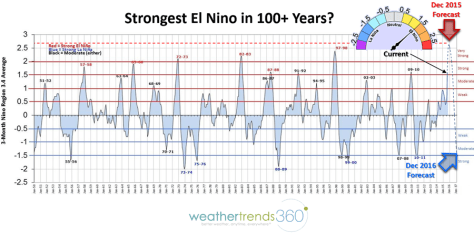 |
Fonte: Weathertrends360.com
A partir deste diagrama eu posso projetar uma situação no futuro. Aqui, passando do Design para Detalhe significa passar de uma visão global (modelo global) a uma situação local (um período reduzido de tempo no futuro ).
Desde que eu preciso conter a minha análise a uma parte local da dimensão espacial, vou me concentrar no Brasil / Bahia onde estou localizado. O modelagem espacial (Circulação Walker ) mostra que El Niño provoca atualmente uma zona de alta pressão (anticiclone) no Nordeste do Brasil, evitando a formação de nuvens (e chuva) e compensar a baixa pressão localizado a oeste, produzindo ventos secos constantes.
El Niño / La Niña evolução como mostrado no diagrama indica a tendência para o verão 2016, com precipitação de volta ao normal ou um pouco mais alto no nordeste.
Minha resposta a esta mudança será para
– O próximo ano plantar árvores (umidade vai favorizar o estabelecimento das mudas) e
– Criar uma situação capaz de resistir melhor na próxima influencia de El Niño em cerca de 5 anos; uma floresta mais densificada com espécies arbóreas com raízes profundas
– No roteiro – se orientar em uma direção com mais colheita de chuva e mais capacidade de armazenamento de água.
A partir de design existentes para adaptação e inspiração
Este exemplo mostra também que design e padrões podem já existir e precisam ser identificados antes de elaborar sobre eles. Princípio 7 aplica-se não só na criação de um novo design, mas também na adaptação a um design existente.

 Anovafloresta - Permacultura - Agroflorestal - Bioconstrução - Regeneração
You must be logged in to post a comment.